
Most questions we get about materials are really questions about price. Why does one of our bags cost what it does, when a bag that looks similar costs half as much? Most of the answer is in three things we buy.
The leather
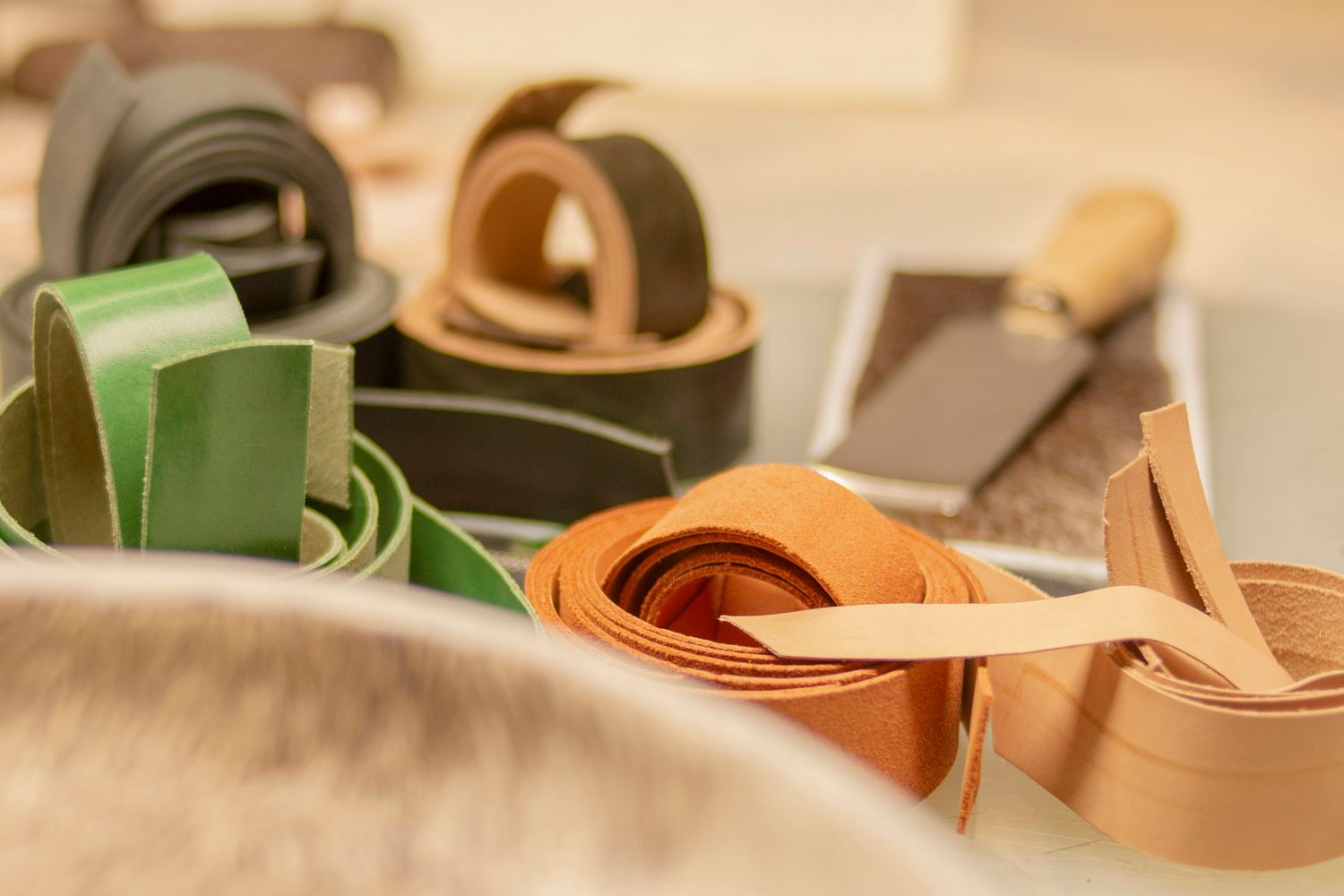
Our leather comes from a tannery in Devon that has been at it since 1863. It is vegetable-tanned, which means the hides are cured slowly in pits of tannin made from bark, rather than tumbled in a drum of chromium salts. The slow way takes months. The fast way takes about a day, and it is how most of the world’s leather is made.
The difference shows up years later, not in the shop. Vegetable-tanned leather is firm when it is new, darkens with light and handling, and holds its shape. It also takes hand-stitching well and can be repaired, which matters to us because we promise to repair it. Chrome-tanned leather is softer on day one and easier to work, and it tends to look its best on day one too.
We buy whole hides rather than pre-cut panels. That way we see the marks, scars and thin patches ourselves and cut around them, rather than finding out when a strap stretches.
The canvas
The canvas for the aprons and the bag linings is woven in Dundee, a city that once had a great many mills and now has very few. It is a heavy, close-woven cotton duck, and we buy it unwaxed so it softens with washing rather than cracking.
Could we buy canvas more cheaply? Easily. The cheaper canvas we tested looked identical on the roll and wore thin at the pocket corners within a year of washing. An apron that goes through at the pocket is not a good apron, however nice it looked when it arrived.
The thread
The thread comes from one mill in Germany, in two kinds: a bonded thread for the machine seams and a waxed linen thread for anything stitched by hand. We buy it in quantities that embarrass our accountant.
Thread is the cheapest part of a bag and the most common reason a bag fails. Buying the best available adds pennies to each piece and removes most of the handle repairs we would otherwise be doing. It is the easiest decision in the business.
What it adds up to
None of the three is the cheapest option, and together they explain most of the difference in price. They are also why we can offer a two-year guarantee, and repairs at cost after that, without going out of business. In the long run, good materials are the cheaper way to make something that lasts.
Leave a Reply