
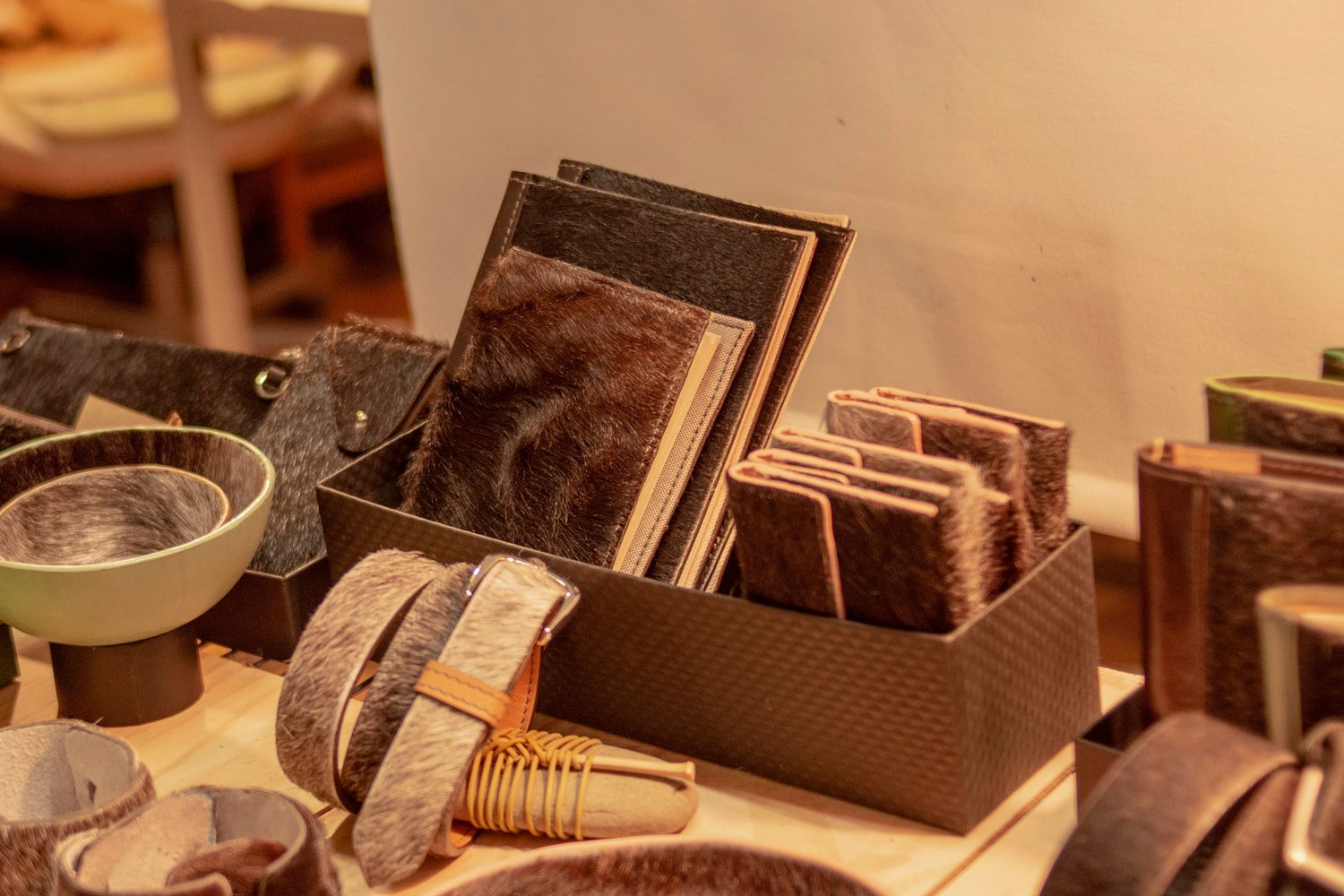
Cutting a bag out of a hide is a bit like cutting biscuits from rolled dough. However carefully you lay out the pattern, there are gaps. On a good hide we lose about a sixth of it. On a hide with a scar or a thin patch across the middle, it can be closer to a quarter.
For a long time those offcuts went into sacks under the second bench. Some became key fobs, which nobody wanted. Some became samples. Most of them simply sat in the sacks, and every so often someone would carry one out to the skip and feel bad about it.
The bookbinder down the road
The answer turned out to be a few doors down the road. A bookbinder works there who needs exactly the pieces we cannot use: small, thin, good-quality leather for spines, corners and the labels on the backs of books. A bag panel has to be a certain size. A book corner only has to be the size of a postage stamp.
So once a fortnight the sacks go down the road. We do not charge her for them, and she does not charge us for taking them away. It is the only arrangement in the business with no invoice attached, and it is the one that has caused the least trouble.
What we keep back
Not every scrap leaves. We keep the longer strips for straps, handle wraps and the neck loops on the aprons. Wherever we can, those are cut from the same hide as the bag they belong to, so the colour matches as the leather darkens.
We also keep a box of pieces from every run for repairs. When a bag comes back in five years with a worn corner, it helps a great deal to have leather from the same batch. It will not match perfectly, because the original will have aged, but it will be closer than anything we could buy new.
Canvas and thread
Canvas offcuts are less glamorous. The bigger pieces become apron pockets, and the rest goes to a primary school in Hunslet for its art room, which asks for them every September. Thread ends go in the bin. We have looked hard for a use for four-inch lengths of waxed thread and have not found one.
Why bother
There is no grand principle behind this. When you buy leather from a tannery in Devon that has been at it since 1863, and pay what that costs, putting a sixth of it in a skip feels wrong in a way that is hard to argue with.
None of it makes the bags cheaper. It does keep the workshop tidier, which, with four people and two benches, matters more than you might think.
Leave a Reply