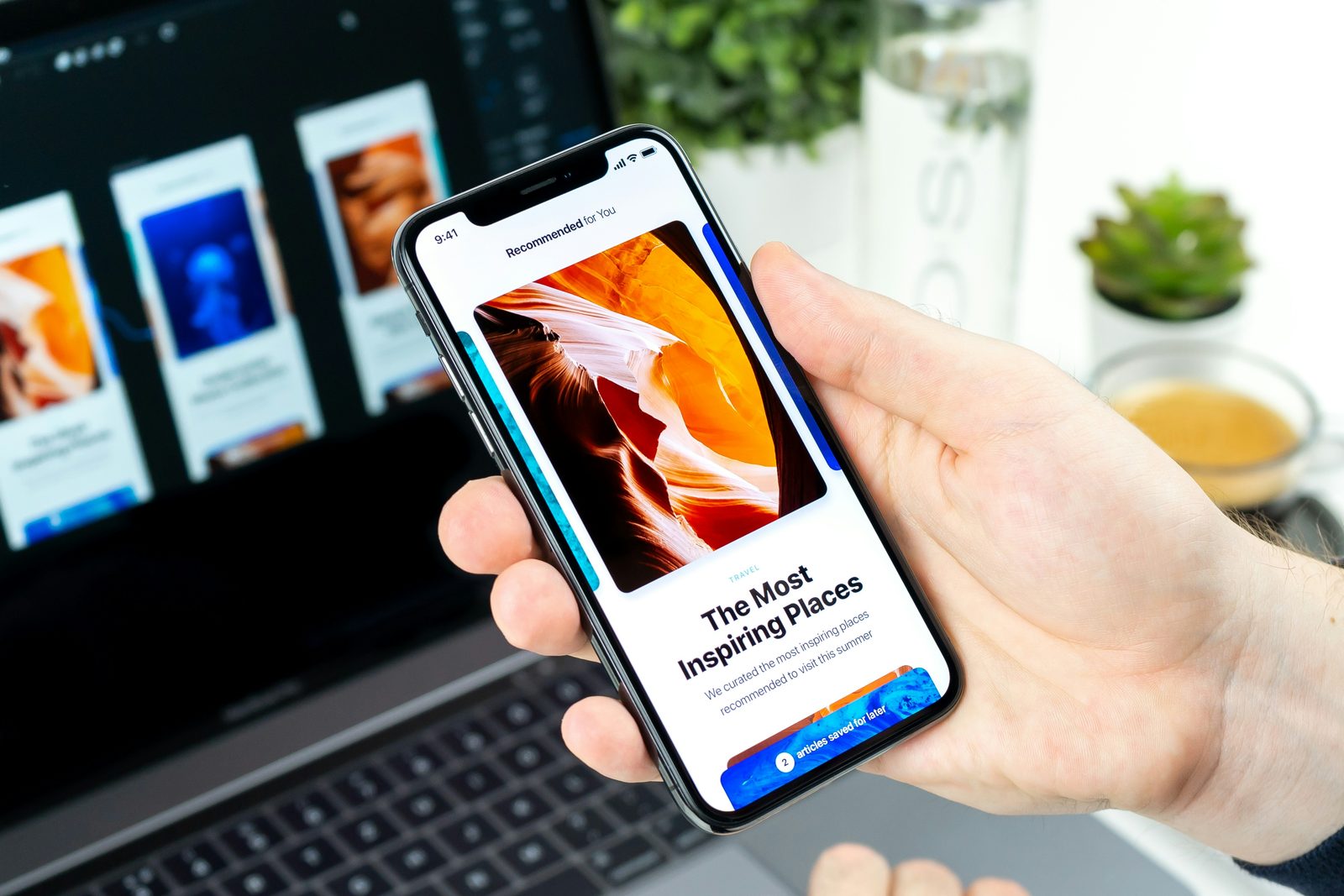
On most of our projects, a developer is in the room for the very first workshop. Not to take notes on a feature list, but to hear the problem the way the client describes it, before anyone has turned it into screens.
It pays off quickly. By the end of the third day there is usually a rough prototype running on a real phone: ugly, half-connected, and far more useful than a polished mock-up, because people hold it the way they will hold the finished thing.
Why a phone beats a slide
A picture of an app on a slide always looks finished. The same screen on a phone, in someone’s hand on a busy street, shows you at once that the button is too small, the text too long and the loading spinner too frequent. Those are cheap to fix on day three and expensive in month three.
The first time a client holds the prototype, they stop talking about colours and start talking about their customers.
Sam Whitfield, lead developer
The prototype is thrown away, always. What survives is the list of things we learned from watching people use it, and a development team that already understands why every screen exists.




Leave a Reply