
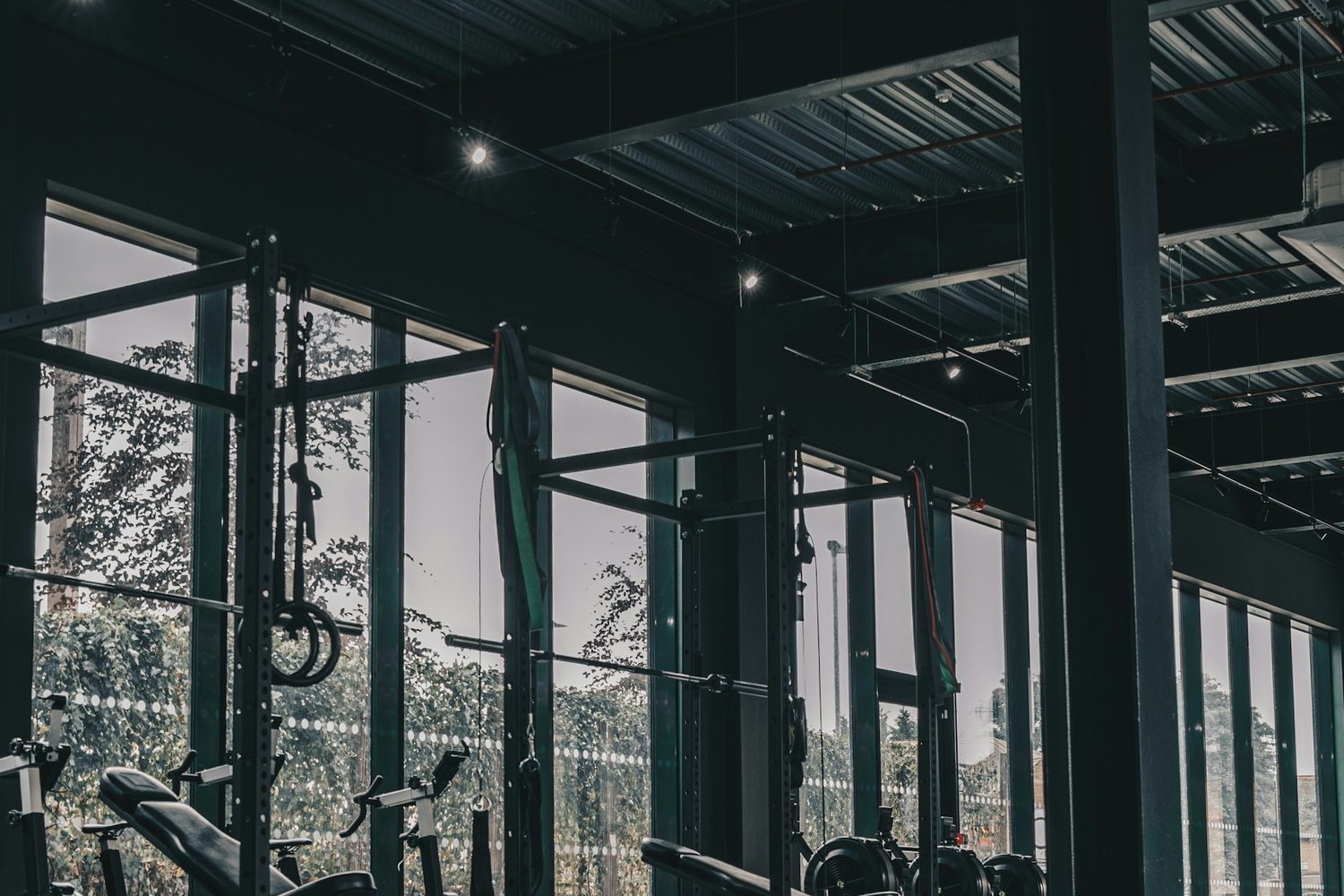
People notice within about ten seconds of walking in. There is no mirror on the long wall, none behind the racks, none anywhere in either room. It is the thing new members ask about most often after the parking.
It is not an aesthetic decision, and it is not a dig at the gyms that have them. It comes down to where your attention goes in the second before a heavy lift.
What a mirror does to a lift
Watch someone squat in front of a mirror and you will see their chin lift and their eyes come up to find themselves. That is a small change in head position and it travels: the ribs flare, the bar drifts forward, and the lift you get is the one that looks best from the front rather than the one that moves best.
Take the mirror away and people look at a spot on the wall, which is where they should be looking. The first fortnight feels strange. After that nobody mentions it, and the lifts are straighter.
There is a second thing, harder to measure. A mirror puts a picture of yourself in front of you while you are working hard, and for a good number of people that picture is not a neutral one. Plenty of members have told us that the absence of mirrors is why they stayed past week two.
How you know what you are doing, then
The usual objection is that without a mirror you cannot see your own form, which is true and is the point. Feedback comes from three other places, and all of them are better:
- A coach on the floor at every session, who is watching the whole rep rather than the half of it a mirror shows.
- Your own body. Learning to feel where the bar is takes longer than looking, and it is the skill that transfers to every lift you do afterwards.
- Video, when it is useful. On the Coached membership we film a set and watch it back together, once, and then leave it alone for a month.
That last one is the honest exception. Video is a mirror with a delay, and the delay is what makes it useful: you do the rep by feel and look afterwards, rather than steering with your eyes as you go.
The rest of the room follows the same idea
No music you have to shout over, because the coach’s voice has to be the loudest thing in the room without raising it. Sixteen platforms rather than twenty, because the extra four would have taken the walking space between them. Nobody filming themselves in the squat rack, which is a rule people assume is about vanity and is really about the rack being occupied by a phone for eleven minutes.
None of this is austerity for its own sake. The room is bright, it is warm, the bars are good and the showers work. It is just that everything in it is there because it helps you train, and a mirror, for most people most of the time, does not.
If you have always trained with one
Come to a free session and try a few sets without. Bring the lift you are least confident in, tell whoever is on the floor that you are used to watching yourself, and let them stand where you would have put the mirror. Most people are surprised by how quickly they stop reaching for it.
Leave a Reply