
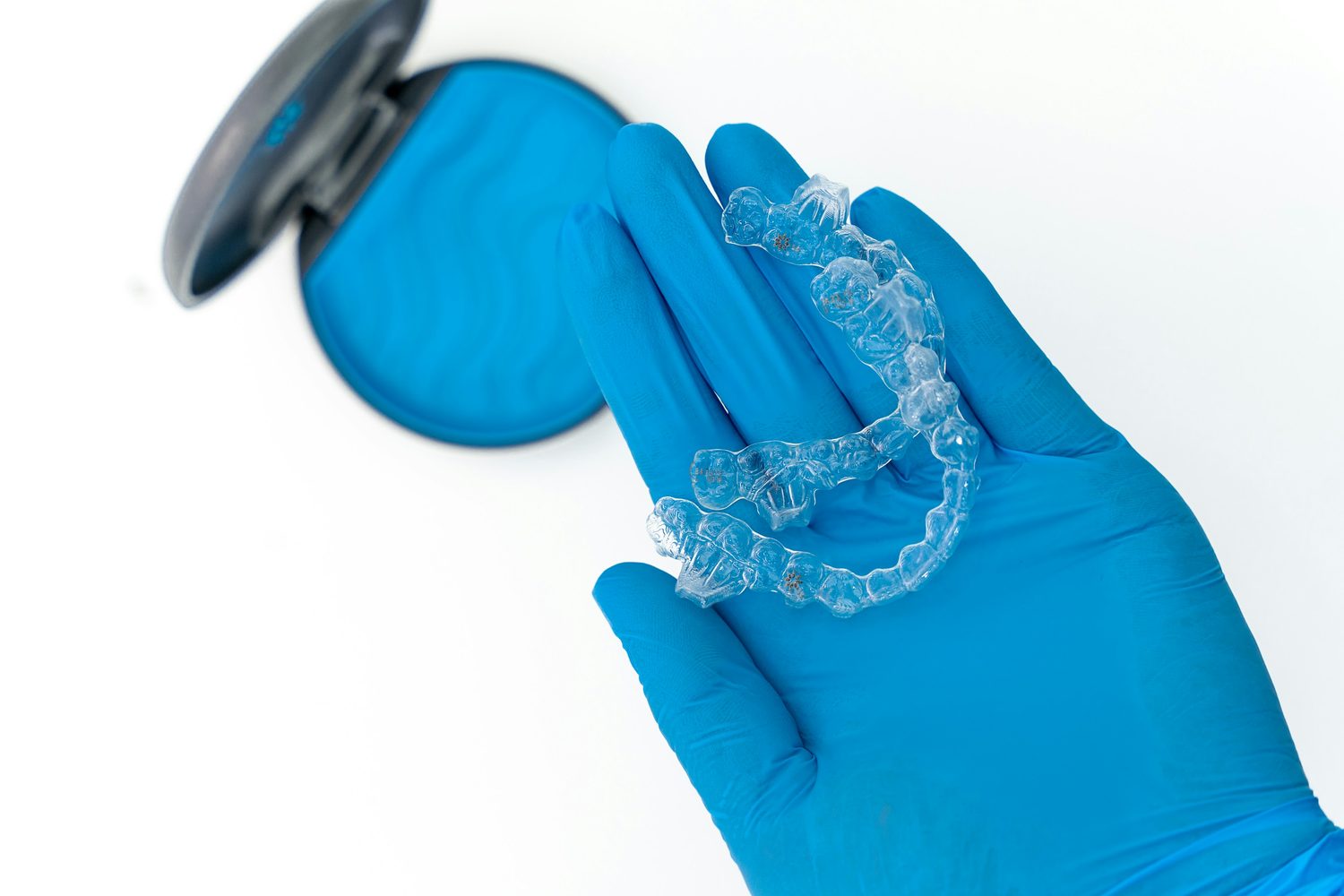
Adults ask about straightening more often than teenagers now, and almost always in the same careful way: at the end of a check-up, half out of the chair, as though it is a slightly silly thing to want. It is not silly, and it is worth knowing what the year involves before you decide.
The first appointment
We take a 3D scan of your teeth, a few photographs and, usually, an X-ray. That is enough to tell you two things: whether aligners will work for your case, and roughly how long it will take.
Not every case suits a clear aligner. Some bites are better treated with fixed braces, and a few should not be treated in a general practice at all, in which case we refer you. You will have the price in writing before anything is booked.
Seeing the plan first
Once the scan is done, the software shows the planned movement from where your teeth are now to where they will finish. You can look at it, ask what happens to the tooth you are most bothered about, and change your mind without having spent anything beyond the assessment.
Two things are worth knowing about that animation. It is a plan, not a promise: teeth move at the speed they move. And it usually looks faster than real life, because it does not run in real time.
The middle of it
Aligners arrive as a series of trays. You wear each one for a week or two, then move to the next. The single thing that decides whether the year works is wearing them twenty-two hours a day: everything except eating, drinking anything that is not water, and cleaning your teeth.
Most people have a hard fortnight at the start. Speech is odd for a few days. Teeth are tender for a day or two after each new tray, which is the point at which they are moving and therefore a good sign. Small tooth-coloured attachments are usually bonded to some teeth to give the trays something to push against; they come off at the end.
You will see us every six to eight weeks, and the appointments are short. Hygiene appointments carry on as normal through treatment, and matter slightly more than usual.
How long
Most of the cases we treat here take between six and fourteen months. Mild crowding at the front, which is what brings most adults in, is often at the shorter end. Anything involving moving back teeth or closing bigger gaps takes longer.
The retainer, which is the actual end of it
Teeth move for life. Every straightening treatment, whatever it costs and whoever provides it, ends with a retainer, and it is not optional. Ours is usually a fine wire bonded behind the front teeth, a clear retainer worn at night, or both.
This is the part people underestimate, and it is where most relapse comes from — not from a treatment that failed, but from a retainer stopped after three years because it seemed fine. Budget for replacing a clear retainer every few years, and tell us as soon as one cracks.
What it costs
We will give you a fixed price in writing after the assessment, covering the trays, the appointments, and the retainer at the end. Aligners for cosmetic straightening are a private treatment; NHS orthodontics is available for children who meet the clinical criteria, and we can refer for that.
Ask at reception for the current assessment fee. If it turns out we cannot help, you pay for the assessment and nothing else.
Leave a Reply