
The oldest person on last term’s woodwork course was sixty-one. She had never held a chisel, told Rob on the first evening that she was probably too old to start, and went home six weeks later with the only stool in the room that nobody could make wobble.
We hear “I’m probably too old for this” at least once a term, usually from someone in their forties. It is almost never true. Age is rarely what holds adult beginners back. A few other things are, and most of them can be dealt with.
What actually gets in the way
The biggest obstacle is not hands or eyesight. It is finding two or three uninterrupted hours in a week, which gets harder in your thirties and forties, not easier. An evening course deals with that by putting the hours in the diary and giving someone a reason to expect you on a Tuesday.
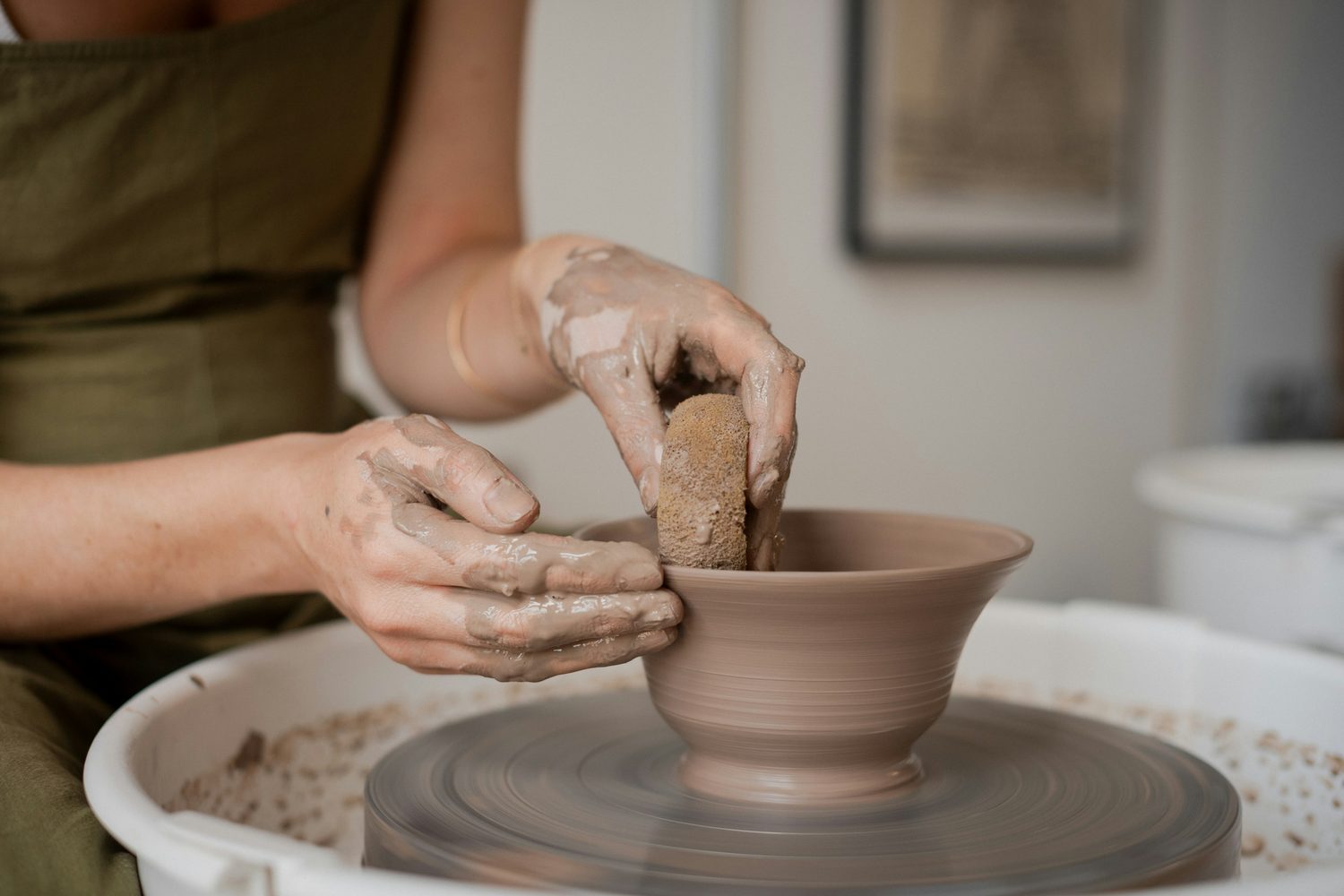
The second is embarrassment. Adults are used to being competent. Being the person whose clay collapses on the wheel for the fourth time, in front of seven strangers, is uncomfortable in a way children never seem to notice. Everyone’s clay collapses. The first evening is deliberately slow for exactly this reason.
The third is the worry of spending money on the wrong course. That one we can usually sort out by talking to you first.
What adults are better at
Adult beginners have real advantages, and the tutors notice them:
- Patience with repetition. Throwing the same cylinder twenty times is dull at nineteen and, oddly, quite restful at forty-five.
- Asking why. Understanding why a joint holds makes the next one better.
- Seeing things through. People who have paid for a course themselves, and arranged a babysitter to get there, tend to finish.
- Knowing what they want to make. A clear picture of the bowl you want on your own table is a very good teacher.
If you are worried about your hands
We are asked this a lot, particularly by people with arthritis or old injuries. Some crafts are kinder than others. Letterpress and bookbinding need care more than strength. Ceramics is gentler than it looks once the clay is centred. Woodwork with hand tools needs some grip, and Rob will show you how to let the tool and your body weight do the work instead of your wrists.
If you are not sure, ring or email before you book and tell us what worries you. One of the tutors will answer, usually within a day, and if we think a different course would suit you better, we will say so.
Starting
Every course here starts from nothing, and every tutor has taught people who arrived convinced they were too old, too clumsy or too late. The autumn term opens for booking on 1 September and courses fill in about a fortnight. If you have been thinking about it for a few years, this is a reasonable year to stop thinking.
Leave a Reply